
What Are The Alternatives To Perfect Binding?
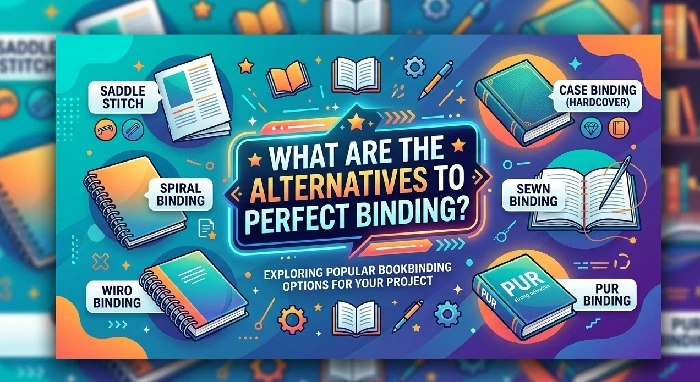
Perfect binding is a common book-binding method that glues pages to a soft cover and creates a flat spine for various types of books. This adhesive-based technique uses a strong glue that binds single sheets or folded ones for a professional finish.
This method produces a clean, professional, and affordable option for medium- to large-sized books.
For self-publishing authors, marketers, or printing businesses, understanding the types of binding methods is necessary.
If you are about to introduce your book to the market, you are in the right place!
Keep reading to know all the options to find what fits your budget perfectly.
What Is Perfect Binding? A Quick Overview
Perfect binding is the method in which pages are attached using a strong adhesive. It is an ideal choice for mid-length books, paperbacks, and manuals.
The pros of this method include:
- A cost-effective choice for medium print runs
- Gives a polished appearance
- Ideal for thicker books
- Spine resistant to various temperatures
- Perfect for short runs
- Suitable for a range of page counts
The cons associated with perfect bound book binding include:
- Durable, but not as durable as sewn bindings
- The spine may crack with time
- Weak glue can make the pages fall out
- Rigid spine prevents the book from lying flat
- Requires more production time than saddle stitching
The Other Most Common Binding Techniques
Binding plays an essential role in the final appearance of your book. Beyond that, it protects the pages and impacts its functionality as well. Book binding comes in distinct shapes and sizes.
Choosing the best method will help you select a book that aligns with your aesthetic and functional goals.
Let’s take a look at the most popular binding alternatives to perfect binding:
1- Saddle Stitch Binding
Saddle stitching is a budget-friendly method where folded sheets are stapled along the spine. This method makes use of metal staples to stitch the papers together. This method is perfect for booklets, magazines, brochures, and small catalogs.
Pros include:
- Affordability
- Quick turnaround times
- Ideal for short team publications
- Easily lays flat when opened
- Works great for thin documents (80 pages maximum)
Cons include:
- Page restrictions
- The spine may look less premium than the perfect binding method
- The book often bulges when more pages are added
- Spine is too thin for text, no space for printing
When compared with perfect binding, saddle stitch is a cheaper option but lacks the quality look brought by the perfect stitching technique.
2- Spiral Coil Binding
This method uses a long plastic coil to hold the cover and the loose pages together. The coil is threaded through the spaced holes and punched along the edge of the book pages and cover. After proper insertion, both ends are crimped to prevent them from getting detangled.
This type of binding is recommended for notebooks and planners, training manuals, cookbooks, and workbooks.
The benefits include:
- Easy customization for the plastic coils
- Pages can easily flip 360 degrees, best for note-taking
- Coils are flexible; they can easily resist bending
- Pages can be edited by removing and replacing the coils
The disadvantages include:
- Not suitable for professional environments, plastic and metal coils lack the high-end look
- Information cannot be printed on the spine, which makes the book identification difficult
- Coils can unravel, leading to the document falling apart
- Coil often makes the book bulky, as it requires extra space on shelves
When compared to the perfect binding, spiral offers a durable look for common uses. However, perfect gives a more book-like appearance.
3- Case Binding (Hardcover Book Binding)
In the case binding method, pages are sewn into sections and are attached to a rigid cover. This technique is said to be the gold standard method for binding.
The pros include:
- A high-quality presentation, like no other method
- Extremely durable, built with protective covers that withstand frequent handling
- Long-lasting technique, considered more prestigious on shelves
The cons include:
- High costs associated with the production and shipping process
- Heavyweight makes them less portable
- Can’t be held for long reading sessions
- Higher prices mean that only a few buyers invest their money in it
When compared with case binding, this technique offers more durability and quality when you place an order with professional book printing service. This method is ideal for novels, textbooks, and keepsakes.
4- Wire O Binding
The wire o binding method or the twin loop binding method is somewhat similar to the spiral binding technique. However, in this method, coils are separated from each other and secure the pages by filling up two punched holes at a time.
This binding technique is ideal for calendars, planners, and professional notebooks.
The benefits include:
- Pages lay flat, are easily readable, and the document can be folded easily
- Gives a more polished look
- A metal spine can hold up for the long term use
- Can be customized to various sizes and colors
The disadvantages are:
- Risk of deformation that comes with the rough handling of metal wire
- Higher costs than standard spiral techniques
- The addition or removal of pages is difficult
- Without proper alignment, the pages may slip out
When compared with binding, wire-o works best for thin documents, whereas perfect binding is recommended for thick books.
FAQS
- How can I get the best results from binding?
To ensure the best results, start by analyzing your book page count, considering your cover material, and sharing all the details with your printer. They will provide you with options that align with your perfect binding goals.
- Which binding technique should I use if my book needs to stay open?
If you need your book to stay open on a desk, you should choose spiral binding or wire-o binding instead of perfect binding. Both are the perfect choice for catalogs, cookbooks, and more.
- How early should I decide the binding technique during the print process?
The preferred book binding technique should be decided during the planning stage. Your decision will influence the page layout, margins, spine width, and the final design, so make sure to make an informed decision beforehand.
Wrapping Up
Perfect binding is the perfect choice for several choices, but not all of them! Saddle stitch, spiral binding, wire-o binding, and case binding are among the most popular binding options available in the industry. Ultimately, the decision depends on your budget, aesthetic preferences, and functionality.

Mary Smith is working as managing director at Book Print Canada, She is very focused on digital and offset printing techniques, serving clients with exceptional results. Her team of experts is well-equipped with the latest trends and also prints books for large-scale businesses.