
The Future of Printing and Publishing: Trends & Predictions for 2030
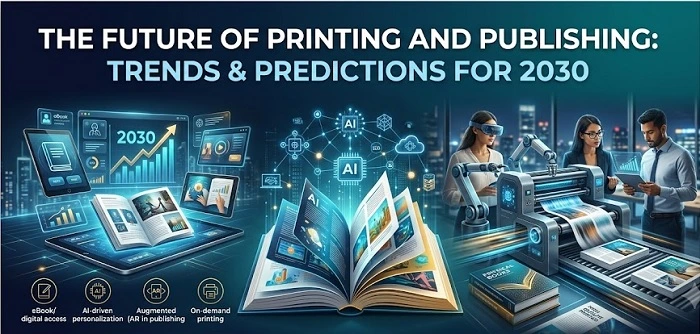
Not long ago, many industry experts predicted that digital technology would make printed materials increasingly irrelevant. E-books were growing rapidly, online content was expanding at an unprecedented rate, and smartphones were becoming the primary source of information for millions of people.
Yet the story didn’t unfold exactly as expected.
Book printing survived.
In many sectors, it adapted and found new ways to remain valuable. At the same time, publishing continued to evolve as technology changed how content is created and consumed.
As we move closer to 2030, the conversation is no longer about whether print or digital will win. The more interesting question is how both will continue to coexist and influence one another.
Continue reading to find out.
An Overview Of The Printing and Publishing Industry
The next few years are likely to bring significant changes across the book printing and publishing landscape. Some developments are already visible today, while others are beginning to emerge in ways that could reshape the industry altogether.
Here is what you can expect ahead.
1- Readers Won’t Have A Favorite Format
Discussions about publishing often revolved around choosing sides for years.
- Would readers prefer printed books or digital editions?
- Would magazines move entirely online?
- Would physical publishing eventually disappear?
But the current consumer behavior suggests a different outcome. This is the reason most of the authors are investing in techniques such as perfect bound book printing.
Many readers now move comfortably between formats depending on the situation.
You will see most of them reading an e-book while travelling, and purchasing a printed edition of a favorite title for their bookshelf as well.
By 2030, publishers are likely to focus less on individual formats and more on delivering content wherever readers prefer to access it.
The emphasis will shift from format selection to audience convenience.
2- Print Will Continue to Hold Premium Value
Physical books maintain a unique appeal despite the growth of digital media.
Readers often associate printed books with:
- Ownership
- Collectability
- Gifting
- Long-term value
- Reading comfort
This is particularly noticeable in categories such as children’s books, coffee-table books, educational materials, and special editions.
As digital content becomes increasingly abundant, physical publishing may become even more valuable as a premium product.
Publishers have already started to experiment with:
- Hardcover collector editions
- Limited print runs
- Special finishes
- Premium paper stocks
- Enhanced visual presentation
Printed products may increasingly be positioned as experiences rather than simply as information-delivery tools until 2030.
3- Artificial Intelligence Will Influence Publishing Workflows
Few technologies have generated as much discussion in recent years as artificial intelligence.
While debates often focus on content creation, AI is likely to have a broader impact on publishing operations.
Many publishers are already exploring AI-assisted tools for:
- Manuscript screening
- Content analysis
- Metadata generation
- Market research
- Audience insights
- Workflow automation
However, the role of human expertise is unlikely to disappear.
Readers from every era have always valued originality, authenticity, creativity, and editorial judgement.
The future will probably involve collaboration between technology and publishing professionals rather than completely relying on automation.
Those who learn how to integrate AI effectively may gain significant efficiency advantages while maintaining quality standards.
4- Print-on-Demand Will Become Even More Important
Traditional publishing often required substantial inventory investment.
Large print runs created financial risk because unsold books occupied warehouse space and tied up capital.
Print-on-demand technology has totally changed that equation.
Instead of printing thousands of copies upfront, books can be produced as orders arrive!
This approach offers several advantages:
- Reduced inventory costs
- Lower financial risk
- Faster market testing
- Improved sustainability
- Greater publishing accessibility
Moving ahead, print-on-demand is likely to become an even more significant part of the publishing ecosystem, particularly for independent authors and niche publishers.
The ability to publish without major inventory commitments may continue attracting new voices into the industry.
5- Sustainability Will Influence Production Decisions
Environmental concerns are increasingly shaping consumer expectations as readers are paying closer attention to how products are manufactured and distributed.
This trend is already influencing book printing Canada decisions.
Publishers are exploring:
- Recycled paper options
- Sustainable sourcing
- Reduced waste production
- Eco-friendly inks
- Efficient printing technologies
Sustainability may become a standard expectation rather than a competitive advantage by 2030.
Companies that fail to address environmental considerations could face growing pressure from both consumers and industry partners.
6- Self-Publishing Will Continue Expanding
A generation ago, publishing opportunities were largely controlled by traditional gatekeepers.
But now, independent authors have access to tools that allow them to publish directly to global audiences.
The growth of self-publishing has transformed the industry as authors can now,
- Retain creative control
- Reach niche audiences
- Publish faster
- Test new concepts
- Build personal brands
This trend is unlikely to slow down, and within the next 4 years, self-publishing may become even more sophisticated as authors gain access to improved publishing resources.
The distinction between traditional and independent publishing could become increasingly blurred as readers often care more about content quality than the publishing path behind it.
7- Human Expertise Will Still Matter
Technological innovation often raises concerns about the future role of people within an industry.
Publishing is no exception.
Yet history suggests that technology rarely eliminates the need for expertise altogether.
- Editors still shape manuscripts.
- Designers still create visual experiences.
- Marketers still connect books with audiences.
- Publishers still evaluate opportunities and manage complex projects.
The publishing industry may look different in a few years, but it will still rely on human judgment in meaningful ways.
FAQS
- Will printed books disappear by 2030?
According to current trends, printed books will remain an important part of the publishing industry, particularly in premium, educational, and collectible categories.
- How will AI affect authors and publishers?
AI is likely to support tasks such as research, workflow management, and content analysis, but the need for human creativity and editorial expertise will still continue to exist.
- Is self-publishing expected to grow in the future?
Of course! Advances in publishing technology, distribution platforms, and print-on-demand services are expected to make self-publishing even more accessible by 2030.
Wrapping Up
The future of book printing and publishing is unlikely to be defined by a battle between digital and physical formats. Instead, the industry appears to be moving toward a more flexible ecosystem where readers choose how they want to consume content and publishers adapt accordingly.
As per the current trends mentioned above, successful organizations and creators will likely be those who are willing to embrace this innovation while continuing to deliver the quality and creativity that a reader craves.

Mary Smith is working as managing director at Book Print Canada, She is very focused on digital and offset printing techniques, serving clients with exceptional results. Her team of experts is well-equipped with the latest trends and also prints books for large-scale businesses.